
I stopped riding to learn real horsemanship
For a while, riding stopped being the center of my relationship with my horse. There’s so much backstory as to why, but to make it short for 90 days I didn’t ride my horse.
1. I learned to pay attention
I started experimenting with consent and giving my horse more of a say in what we did together. I was flabbergasted by how many times he had clearly told me “no”—and how often I had missed it, dismissed it, or kept going anyway.
That was hard to admit. But learning to notice his signals changed the way I showed up for him. I began to understand that listening means more than watching for the biggest reaction. It means paying attention to the small cues, too.
2. I learned to regulate myself
Without the pressure to ride, exercise, or accomplish something every time I went to the farm, I took a lot of stress out of my own body. I could simply enjoy being there and spending time with horses.
I hadn’t realized how much pressure I was carrying—pressure from my own expectations and from worrying about what other people might think. That stress didn’t stay inside me. It affected the energy I brought to my horse, too.
I’m still working on this. I want our time together to feel as positive and comfortable as possible for both of us.
3. I found a deeper connection
When I slowed down, my horse connected with me in ways I once thought were out of reach. The moments we shared felt more genuine because they weren’t always leading toward a ride or a task. I personally think it’s moments people can’t even dream of…because the horse started and initiated it.
I began to see how much connection can grow when a horse has room to choose to be with you.
4. I saw how happy he could be
I still haven’t seen my horse as happy and content as he was when he knew I wasn’t there to ride.
That sounds ridiculous, and it can make me feel like a terrible person to say out loud. I do think he enjoys doing things with me. I think he enjoys having a job, to a certain extent. But I also had to be honest: my stress and the pressure I put on myself were affecting him.
Seeing how relaxed he could be when riding wasn’t the expectation was a truth I needed to face. It changed me forever; it broke my heart, but I needed to see it.
5. I learned to trust him to tell me what he needs
I stopped deciding in advance what every interaction was supposed to look like. Maybe he wants to be groomed differently today. Maybe he’d like to go for a walk. Maybe he’d rather stand together for a while.
Now that I’m more emotionally settled—and paying closer attention—I can notice those cues and respond to them. If he starts wandering toward the path, I can be curious about whether he wants to walk. If he shifts or moves away during grooming, I can adjust.
Horses are such a gift. We shouldn’t take them for granted, and we shouldn’t assume that riding is the only way to build a meaningful relationship with them.
It took me five years to truly understand that my relationship with my horse needed to come first. Now we’re starting down a fresh path, with so much more ahead of us.
I still ride. It just isn’t the measure of our relationship anymore. And I cannot express how much happier I am—and how much happier he seems—because of that.
I hope this resonated with you; it’s a hard space to be in.
The horse world can be brutal. As always, my email is open if you ever need a supportive hand.
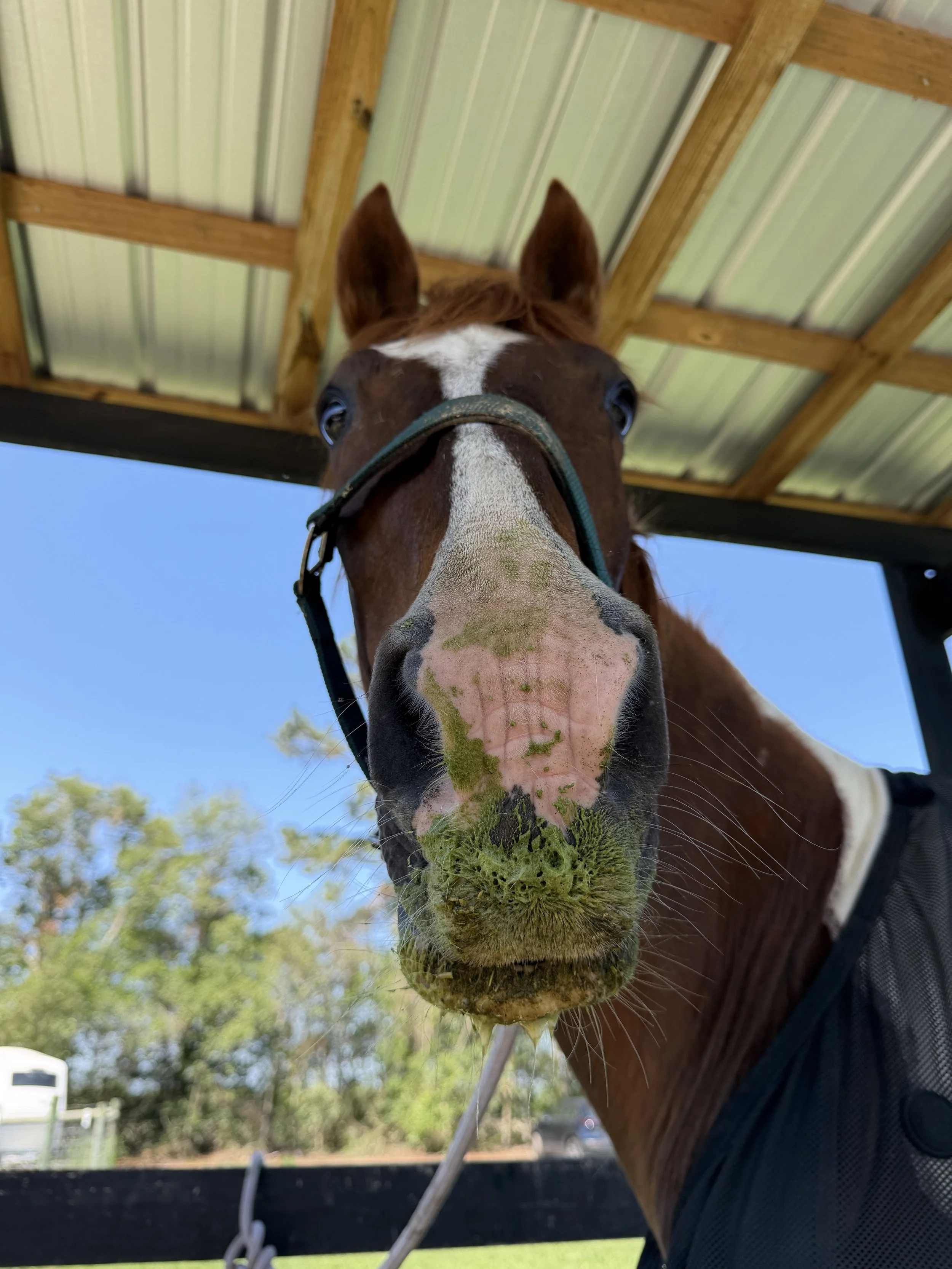
(my baby boy, Perry!)
